


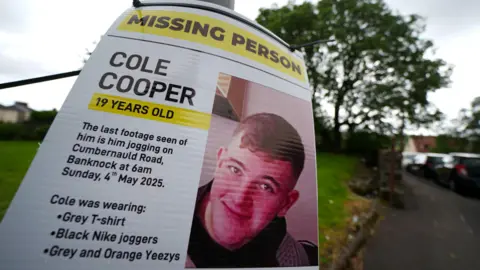
As 19-year-old Cole Cooper stepped out into a crisp May night earlier this year, no-one would have considered he was in the concluding period of his life.
He had been spending time with pals at a pub near his home in the central region of Scotland.
But a few hours after, his phone was off - zero communications, no digital activity.
Once there was still no trace of him a week later, his loved ones phoned police.

Caution: This article contains upsetting details and references to suicide
Cole's family told that they advised officers from the start that Cole's vanishing wasn't normal conduct - and that he had been facing challenges with his mental health.
"We clarified to the police about Cole's psychological condition. Even though Cole had not been confirmed to have depression or comparable problems, he did struggle," said his mother.
"And they nonetheless did not designate Cole as a critical risk.
"He's at no time run away... police have not ever been engaged in my son's life until the period he went missing."

The law enforcement initially classified Cole to be medium risk after carrying out an assessment and consulting family and friends.
They said Cole regularly moved between addresses and that it was not unusual for him to be unreachable with his household for certain durations.
Cole's loved ones felt like they had few alternatives but to become investigators and make their own appeal.
His relative, Aimee, said: "We just decided we're going to do it ourselves when they're not listening to us."
They utilized social media, writing one simple update: "Has somebody seen Cole?"
"The moment that it was posted, it started to somewhat expand," his aunt said.
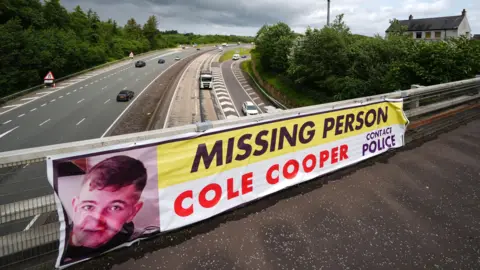
Cole's case began propagating across the Scottish region and further afield. His photograph was on numerous online clips, social media stories and social media posts.
The relatives created a dedicated page, and potential sightings and details were distributed via the internet between many citizens.
Aimee said they obtained many contacts from individuals who suspected they had seen Cole.
The relatives arranged search parties, which comprised up to 300 people at times in the advanced periods of their search.
The absence had surprised the local population in the area, the former mining village on the shores of the waterway near to where Cole lived. Local residents scoured the region as they assisted with the hunt.
The family also began to perform their own house-to-house investigations, requesting people to examine their security cameras.

"It's rather disheartening that it reached a juncture where we were needing to take that action," the relative said.
"In place of you focusing on your pain and your hopelessness and your urgency for that person, you're now in a different role."
The authorities says the household had indicated a intention to perform their own hunts and public calls, which they were entitled to do.
"We counseled them on this. However, at no point did the authorities request or encourage the family to direct the case or give progress reports," a spokesperson said.
The officers had also been seeking Cole.
A week after he was noted as vanished, they released their first public appeal - then they raised his risk rating from medium to elevated.
Search and rescue canine units and unmanned aircraft were brought in, as well as the police helicopter and divers.
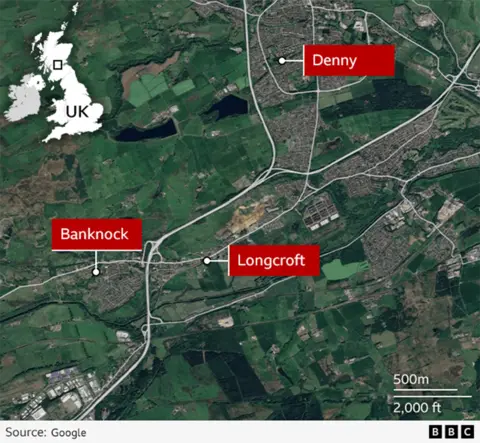
The household assembled the last hours of Cole's life and established a timeline of where the teenager had traveled, hoping for leads.
They found recordings of him from just after he exited the tavern in Denny, in Stirlingshire, on the Saturday night.
He was recorded on surveillance walking to a private event, then afterward a residential surveillance detected him walking to and from his dad's house, even though he wasn't in.
The family got security recordings from a auto repair shop which recorded Cole as he walked along the main street at Longcroft, pausing near a bus stop.
At six in the morning,


